_edited_edited.png)

Search Results
21 results found with an empty search
- A New Way to Control Engagement in Your Flex VRA System: Introducing House Rules
It's a common request from audiologists using the Flex VRA system. "The videos on Flex look great, but during visual reinforcement audiometry I want the center monitor to be less engaging. I need children turning toward the left and right reinforcers, not focusing on the middle screen." Because Flex VRA is a software-driven VRA system, these kinds of refinements have been easy to work around. However, after hearing this request from multiple clinics across the country, we decided to build a dedicated feature into the platform. We're calling it House Rules. What Is House Rules? House Rules is a simple but powerful control inside the Flex VRA system that lets you determine exactly how stimulating (or intentionally unstimulating) the center reinforcer should be during testing. When enabled, House Rules: 1. Keeps a reinforcer stimulus the same regardless of content changes made to the Left and Right reinforces from the remote control. 2. Can always display a subtle, non-distracting moving pattern on the center monitor instead of the more engaging Flex VRA videos. 3. Allows you to determine if the Flex VRA monitor will use it's physical LED light bar. 4. Gives you the option to mute audio entirely on the Flex monitor without affecting the left and right reinforcers sound controls. This lets you set “house rules” for how you want your center reinforcer to behave. It ’s a small feature that can make a meaningful difference in the effectiveness of visual reinforcement audiometry, especially with children who fixate easily. Why House Rules Improves Visual Reinforcement Audiometry During VRA testing, the center monitor often becomes unintentionally attractive, especially when high-quality animated content is displayed like that on the Flex VRA. House Rules helps clinicians: -Reduce over-fixation on the center reinforcer -Improve left/right head turns -Maintain clearer localization responses -Streamline the flow of pediatric testing -Keep the child’s attention where it matters most Flex VRA continues to evolve into one of the most customizable and clinician-friendly VRA systems available, and House Rules is another tool designed to support accurate and efficient pediatric audiology workflows. Availability House Rules will ship standard on all new Flex VRA systems beginning January 2026. If your clinic already owns Flex VRA and would like access to this feature, email our team at sales@flexvra.com , and we will provide an upgrade path for your existing VRA equipment.
- Transforming Pediatric Hearing Tests with Hey Bear Sensory and Flex VRA
For pediatric audiologists and parents alike, keeping a child engaged during a hearing test can be a serious challenge. But what if the solution lies in a vibrant world of smiling fruits, upbeat music, and dancing characters? That’s where Hey Bear Sensory content comes in—a game-changer in pediatric audiology, especially when paired with advanced tools like the Flex VRA system . In this blog, we’ll explore how Hey Bear Sensory videos significantly enhance the effectiveness of pediatric hearing tests by improving attention, cooperation, and test accuracy. What Is Hey Bear Sensory? Hey Bear Sensory is a YouTube-based channel known for its brightly colored, rhythmic, and animation-rich videos designed to stimulate young minds. Originally created for babies and toddlers to support sensory development, Hey Bear’s content has found a powerful application in pediatric medical environments—especially in hearing evaluations. Why Visual Engagement Matters in Pediatric Hearing Tests During Visual Reinforcement Audiometry (VRA) , a child's attention must be quickly captured and redirected based on auditory cues. Without engaging visual stimuli, children may lose interest or become uncooperative, making it difficult to obtain accurate hearing thresholds. This is where Hey Bear Sensory content excels. With its vibrant characters, bouncy music, and fast-paced visuals, it captivates a child’s attention better than traditional reinforcement toys or outdated animations. The Flex VRA Advantage: Hey Bear + Modern Tech Flex VRA has partnered exclusively with Hey Bear Sensory to provide the most up-to-date and exciting visual stimuli for young patients. When children see their favorite dancing fruits appear on the screen after responding to a sound, they are much more likely to stay focused and participate consistently. This innovative combo results in: Improved child cooperation Faster test completion More reliable hearing data Related: How Can You Tell If Your Child Has Impaired Hearing? Real-World Results from Audiologists Clinics across the country have seen tangible improvements in patient behavior and testing outcomes. “My 4-year-old son was so engaged with the Hey Bear clips that he signed for more when they ended. Definitely the most willing participation we’ve ever had!” — Parent via Instagram @flexvra “It creates a better environment and keeps kids distracted during tympanometry and otoscopy.” — Audiologist, Texas Such feedback illustrates just how transformative sensory video content can be when integrated into the right technology. Where Else Is Hey Bear Sensory Being Used? Hey Bear Sensory’s reach has extended beyond audiology clinics. It’s used in: Pediatric dental offices to reduce anxiety Therapy settings for children with autism or developmental delays Sensory rooms in schools and hospitals Their YouTube channel ( Hey Bear on YouTube ) now has millions of followers , affirming its popularity and effectiveness in child-centered care. The Science Behind Visual Reinforcement Understanding the science behind visual reinforcement can help audiologists appreciate why Hey Bear Sensory content is so effective. Children are naturally drawn to colorful and dynamic visuals. This attraction helps maintain their focus during auditory tests. By integrating visual stimuli, we create a more holistic testing environment. The combination of sound and sight engages multiple senses, making the experience more enjoyable for children. Enhancing Patient Participation One of the biggest challenges in pediatric audiology is ensuring that children actively participate in their hearing evaluations. Traditional methods often lead to frustration for both audiologists and young patients. With Hey Bear Sensory , children are not just passive observers. They become active participants in their own evaluations. The engaging visuals encourage them to respond to sounds, leading to more accurate results. The Future of Pediatric Audiology As technology continues to evolve, so too does the potential for enhancing pediatric audiology practices. The partnership between Flex VRA and Hey Bear Sensory is just the beginning. Imagine a future where every hearing test is a fun, interactive experience! By embracing innovative solutions, we can transform the way children perceive audiology. Final Thoughts When paired with Flex VRA , Hey Bear Sensory turns pediatric hearing evaluations into a fun, interactive experience—making audiologists' jobs easier and young patients more cooperative. Ready to improve your clinic’s pediatric outcomes? Learn more about Flex VRA’s customizable systems and how they use Hey Bear Sensory content to revolutionize auditory care. Let’s make hearing evaluations engaging and effective for every child!
- The Science Behind Pediatric Audiology: How Children Respond to Visual Cues
When it comes to testing young children’s hearing, traditional methods used for adults just won’t work. That’s where pediatric audiology steps in—a specialized field that tailors hearing evaluations to match the developmental and behavioral needs of infants and toddlers. One of the most effective tools in this space is Visual Reinforcement Audiometry (VRA) , which relies heavily on how children respond to visual cues. At Flex VRA , we’ve developed innovative VRA systems to support audiologists in delivering accurate, engaging, and stress-free hearing tests for pediatric patients. But why do visual cues work so well—and what’s the science behind it? Why Pediatric Audiology Is Different Children, especially those under the age of three, can’t simply raise their hand or press a button when they hear a sound. Pediatric audiology uses behavior-based methods to gauge responses. One of the most common methods, VRA, involves pairing auditory stimuli with entertaining visual rewards—like moving animations or engaging lights—to condition a child to respond to sounds. This method is particularly effective because it leverages the principles of classical conditioning, which help reinforce auditory behavior through a visual reward. The Power of Visual Cues in Pediatric Audiology Young children are naturally drawn to visual stimuli. Their developing brains are highly responsive to color, movement, and light—making visual cues ideal for grabbing and holding attention during a hearing assessment. Here’s how the process works: Conditioning Phase: When a sound is presented, a corresponding visual stimulus (like a dancing bear) appears immediately afterward. Over time, the child learns to look toward the sound source expecting a reward. Testing Phase: The audiologist presents a sound without the visual cue to determine if the child still responds. A correct head turn indicates the sound was heard and processed. By using visual cues in this way, audiologists can collect reliable hearing thresholds even in preverbal children. Flex VRA’s Innovation in Visual Reinforcement Audiometry Flex VRA is proud to be at the forefront of technology in pediatric audiology. Our systems allow clinics to: Customize video content to keep children engaged. Control visual cues remotely for ease of use. Integrate seamlessly with existing audiometers. Provide sensory-rich stimuli from trusted creators like Hey Bear Sensory . With feedback from over 1,000 clinics, we continue to refine our systems to make pediatric hearing tests more fun, flexible, and functional than ever. Clinical Benefits of Using Visual Cues The advantages of using visual reinforcement in pediatric hearing assessments extend beyond engagement: Improved Accuracy: When children stay focused, audiologists get more reliable results. Reduced Testing Time: Engaged children are more cooperative, allowing for faster assessments. Positive Patient Experience: When testing feels like play, children are less fearful and more relaxed. Incorporating technology that matches children’s cognitive development helps create a smooth testing experience for clinicians, parents, and patients alike. Final Thoughts Visual cues are more than just fun distractions—they are essential tools grounded in behavioral science. At Flex VRA, we understand the unique challenges of pediatric audiology and are committed to providing solutions that improve both the testing experience and its outcomes. Want to see how our VRA system works in real time? Contact us for a free demo and discover why hundreds of clinics trust Flex VRA to support their youngest patients.
- Turn Better Focus into Better Pediatric Audiology Outcomes with FlexPC
Testing a child’s hearing can be one of the most demanding tasks an audiologist faces. Since Flex VRA’s inception in 2018, we’ve had the privilege of observing clinicians across the country perform visual reinforcement audiometry evaluations and one thing is clear. . . Every session with a young child has a limited window of focus. Once that attention window opens, the clock starts ticking. The moment you begin testing, distractions are always waiting. Wiggling, snack requests, movement, or tears can mean lost data and lost cooperation. At Flex VRA, our mission is to help clinicians make the most of that precious window. That means removing friction from the testing process so attention stays where it matters most: on the child, not the VRA system's remote control. One of the results of this mission is Flex PC. Flex PC is a lightweight software tool that runs alongside any computerized audiometer (Interacoustics, Otometrics, MedRx) and lets clinicians create custom hotkeys to control their Flex VRA system directly from the testing computer. No more reaching for the remote and no more divided attention. Just fast, intuitive control at your fingertips. And now, Flex PC is completely wireless. Simply plug in the USB dongle and go. It uses our new zoned radio-frequency protocol for instant, reliable activation up to 30 feet with no pairing, drivers, or setup required. We believe every pediatric audiologist deserves that level of simplicity and focus, so starting now, every Flex VRA ships with Flex PC. Because when seconds count, the best reinforcement isn’t just for the child. It’s for the clinician, too. Check out Flex PC in action here and if you have questions, feel free to reach out to us directly at sales@flexvra.com .
- At What Age Should Children Get Their Hearing Tested?
You celebrate every sound your baby makes—from the first cry to the first giggle. But what if something seems off? Maybe they’re not responding to your voice, or their speech isn’t developing like you expected. These moments can raise big questions—especially when it comes to your child’s hearing health . One of the most important, yet often overlooked, parts of early childhood care is the hearing test . Knowing when and how often your child should have their hearing tested can make all the difference in their ability to learn, speak, and connect. At Flex VRA , we specialize in child-friendly hearing assessments designed to detect issues early—when support can be most effective. Let’s break down the recommended timeline for hearing tests and how to know if your child needs one. Why Early Hearing Tests Matter Hearing is the foundation for your child’s language, social, and emotional development. If a child can’t hear clearly, it can affect how they learn to speak, connect with others, and interact with the world around them. In fact, according to the American Academy of Pediatrics , early detection of hearing loss—preferably before 3 months of age—leads to better outcomes for speech and language development. That’s why newborn hearing screening is now standard practice in hospitals across the U.S. Recommended Hearing Test Timeline Here’s a breakdown of when your child should get hearing tests: Newborn Screening (Birth–1 Month) Most babies receive a hearing screening before leaving the hospital . If your baby didn’t, or if you’re unsure of the results, schedule one right away. These tests are painless and only take a few minutes. Follow-Up Testing (By 3 Months) If your baby didn’t pass the initial screening, a comprehensive diagnostic test should be done by 3 months of age to confirm whether hearing loss is present. Infants and Toddlers (6 Months – 3 Years) Even if your child passed their newborn screening, it’s important to monitor for developmental signs and schedule tests if you notice delays in speech, lack of response to sounds, or ear infections. Preschool and Beyond (4–5 Years) Routine hearing tests before starting school help ensure your child can thrive in learning environments. Many pediatricians or school systems include these screenings as part of a regular checkup. You can read more about hearing development and milestones at KidsHealth’s Hearing Guide for Parents . What Hearing Tests Look Like at Different Ages At Flex VRA, we use age-appropriate techniques to assess hearing in children of all developmental stages: Visual Reinforcement Audiometry (VRA) for infants and toddlers Conditioned Play Audiometry for preschoolers Standard Audiometry for older children and teens Each test is designed to be fun, stress-free, and highly accurate—giving both you and your child confidence in the results. Signs Your Child May Need a Hearing Test Sooner Even if your child has passed early screenings, keep an eye out for: Speech delays or unclear speech Frequent ear infections Not responding to their name Turning up the volume excessively Difficulty following instructions If you notice any of these signs, trust your instincts and schedule a hearing evaluation. Early action leads to better outcomes. Schedule a Hearing Test Today Hearing tests are one of the most powerful tools we have to support your child’s development. If it’s time for a screening—or if you’re concerned about your child’s hearing— contact your local audiologist today .
- Keep Your Pediatric VRA Testing Distraction-Free with Touchscreen Lock
In pediatric audiology, even the smallest interruption can impact the accuracy of a Visual Reinforcement Audiometry (VRA) test. That’s why Flex VRA includes a simple way to protect your on-screen controls from curious little hands—perfect for clinics where the touchscreen might be within a child’s reach. The Problem During pediatric hearing tests, young patients are naturally drawn to bright, interactive displays. A single accidental tap can bring up menus, alter settings, or interrupt the flow of your VRA session. The Solution With Flex VRA’s Service Menu Access setting, you can lock down the touchscreen so that the on-screen menu only appears with a deliberate long press in the top-left corner. Accidental touches are ignored—no more sudden menu pop-ups during testing. Only trained staff can access settings, ensuring every visual reinforcement audiometry session runs smoothly. How to Enable Touchscreen Lock in Flex VRA Go to the Setup Menu on your Flex VRA system. Find Service Menu Access. Change the setting to long touch on top-left corner. Press "Play VRA" Button. How to lock your Flex VRA touch screen monitor Why Clinics Love This Feature Improved Test Accuracy – Keeps your pediatric audiology testing free from distractions. Professional Control – Only your team can access sensitive settings. Better Patient Experience – Children stay engaged with the VRA stimulus, not the menu. Flex VRA is built for the unique demands of pediatric hearing testing, giving audiologists reliable tools to deliver accurate results—without the interruptions.
- FlexCam by Flex VRA
I'm excited to see our most recent project, FlexCam, being installed and trialed at our test clinic! 170 degree image, real-time display on the PC (no image delay), and sits on-top of your screen so you can test and view at the same time! We hope this assists in the testing procedure for audiologist doing visual reinforcement audiometry, research, or who do not have a clear view of the patient from the booth window.
- Flex VRA Integrates into GSI Audiostar Pro!
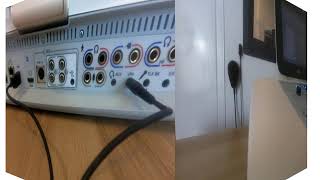
We are happy to announce that Flex VRA is now capable of direct integration into the Grason-Stadler Audiostar Pro (Versions 1 and 2)! All that is needed is the purchase of our Flex integration cable and you're all set! For more information, please contact your local equipment representative.
- Flex Screen Mirror!
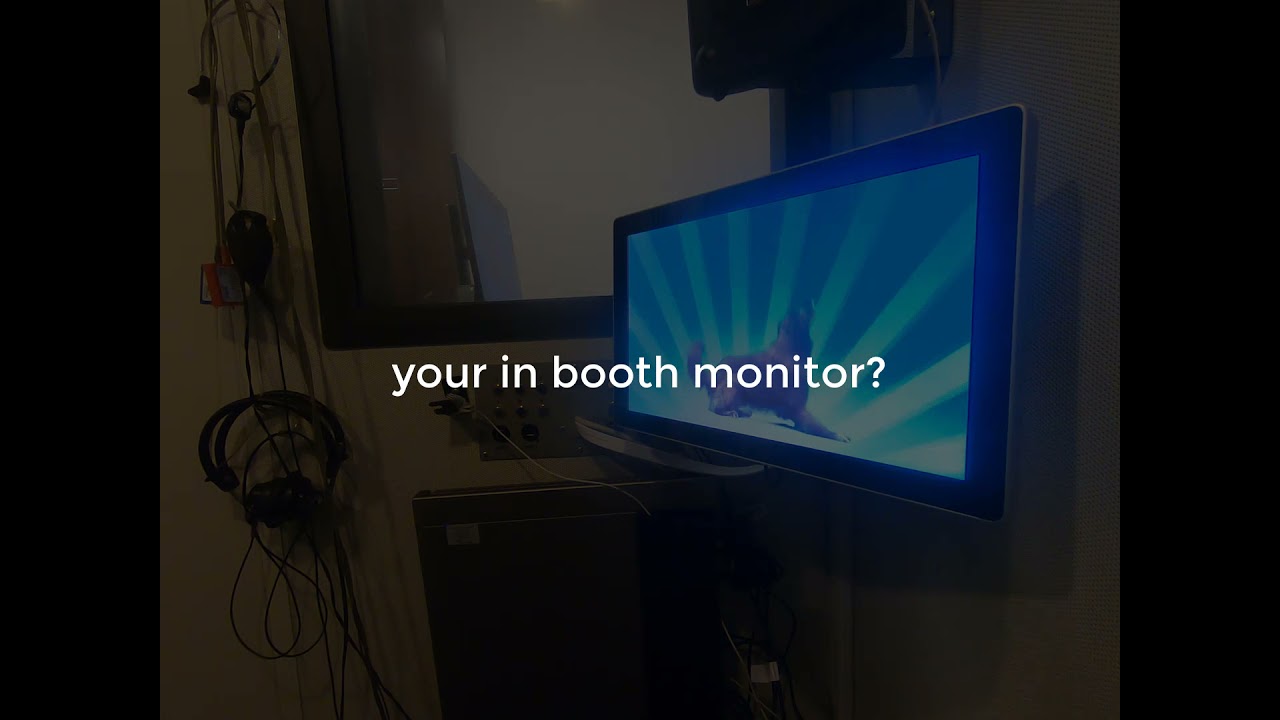
Our most recent endeavor was a request directly from "the field." The concern being that between having three Flex monitors in the booth, speakers, and an in booth monitor to mirror the computer screen for counseling and viewing testing results, there was simply too much "stuff" on the booth walls. "It sure would be nice if one of the VRA monitors could just double as our in booth monitor!" We are happy and excited to offer the Flex Screen Mirror option an all new and existing Flex system! https://youtu.be/GBTjU9Wjchg